Self-employed with rental income: what to prepare
Have business income and a rental property? Organize separate records for your Canadian tax return and request help with T2125 and T776 reporting.
Request a quote →If you work for yourself and also rent out property, organize the two activities separately before preparing your return. One set of bank statements may contain several kinds of income and spending; it does not tell the whole tax story.
CRA sources checked October 23, 2026. This guide focuses on personally held activities; corporate ownership and partnerships may require a different approach.
Do I need both T2125 and T776?
A sole proprietor commonly uses T2125 to report business or professional activity. T776 is used to calculate income and expenses from real estate rentals. Having both activities can therefore mean including both kinds of reporting with your personal return. Separate businesses may require separate T2125 forms.
A rental operation is not always treated as property income. CRA considers the services provided to tenants; substantial additional services can indicate a business. Short-term rentals, corporate ownership and mixed personal use deserve a specific review.
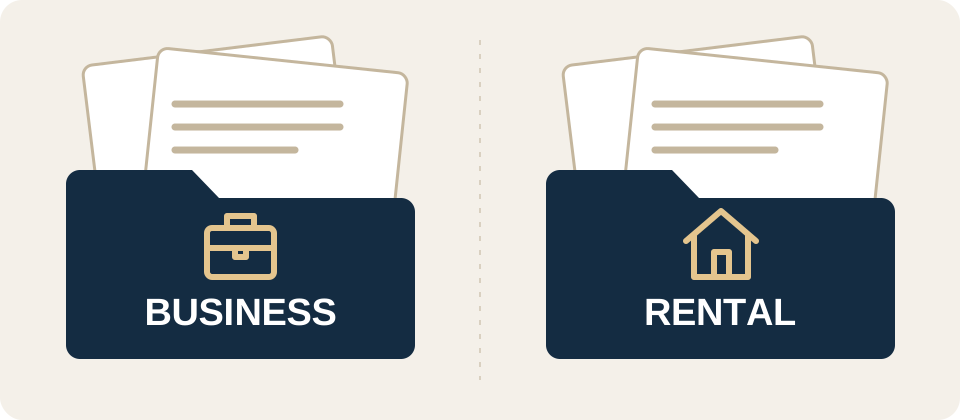
1. Create a folder for your self-employed work
- Income summaries, invoices, commission statements and platform reports.
- Expense records grouped by business activity, with receipts available.
- Vehicle-use records, workspace details and equipment purchases, where relevant.
- Prior-year business schedules and GST/HST information, if applicable.
Include every business activity in your summary. The records can differ for a trade or contracting business, a healthcare practice or self-employed and commission-based work. Describe each activity so the preparation discussion covers your situation.
2. Create a separate folder for each rental property
- Rental income summary, leases and platform statements, if used.
- Expense invoices and statements, including financing records that distinguish interest from principal payments.
- Ownership details, dates available for rent and periods of personal use.
- Purchase or sale documents, renovation invoices and prior rental schedules.
Keep major improvements identifiable instead of combining them with routine maintenance. The records help determine the appropriate treatment; a cost appearing on a statement does not automatically make it deductible. Explore rental property tax preparation.
3. Explain overlaps and changes
Flag expenses that relate to more than one activity, reimbursements, mixed personal use and transfers between accounts. Keep the underlying receipt and a note explaining its purpose. Do not count the same expense twice. Tell us about a new property, a sale, a new business or a change in ownership.
For example: a contractor who also rents out a condo
This is an illustrative situation, not a client case. The contractor would prepare one summary for contracting work and another for the condo. The inquiry should mention both activities, the tax years and whether the records are ready, so the preparation discussion covers the full situation.
Ask about business and rental tax help →Use the printable document checklist for additional records. See what affects the preparation fee before requesting a quote.
General preparation guidance. Filing obligations and eligible expenses depend on your facts and tax year.
Let's discuss your tax needs.
Tell us the tax years, province and filing needs. Prepare a short quote inquiry or contact us directly to discuss availability and scope.
Email: elena@arsenaccounting.com
Phone: (647) 297-4126
Before you send
Please provide a brief description of the assistance you need. Do not email SINs, passwords, banking details or sensitive tax documents in your initial inquiry. We'll discuss an appropriate secure method of sharing documents if we proceed.
Information on this website is general and is not individualized tax advice. Engagements are subject to acceptance, agreed scope and applicable terms.